
Most of a pill isn’t medicine.
The medicine is only 5 to 10% of a pill. The rest is fillers, and some fillers contain common allergens. The label doesn’t have to warn you.
So we mapped the fillers in every FDA-listed drug. Nothing like it existed before.
AllergenMeds is for information only, not medical advice. Always talk to your doctor or pharmacist before changing any medication.
How to find your medication’s ID number (NDC)
Every medication has a number called an NDC. It tells us exactly which product and maker you have. Here's where to look.
Look just below the drug name and quantity.
Look beside the barcode, near the bottom.
Look on the label wrapped around the bottle.
See it in action
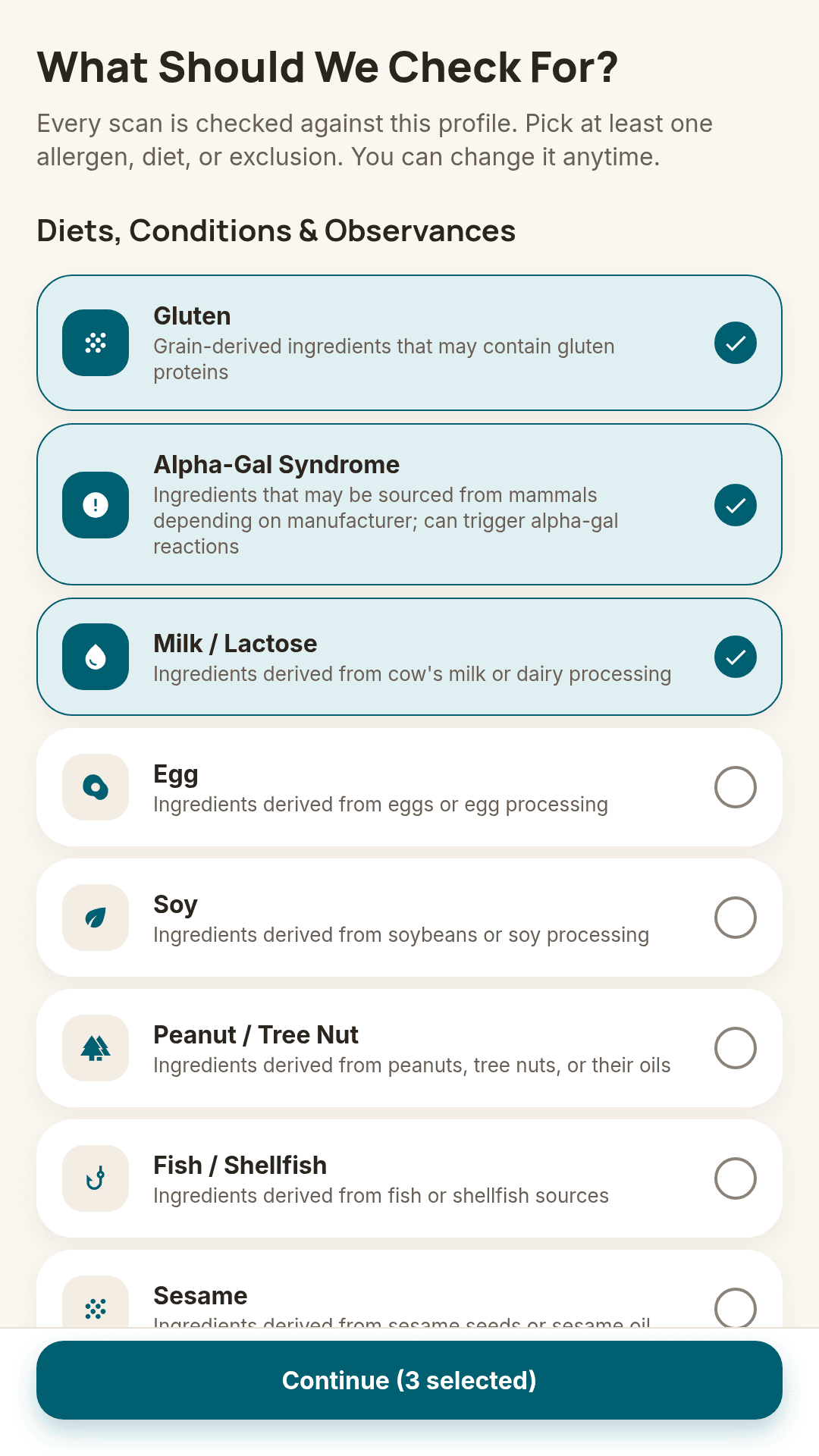
Build your profile (1 of 7)
FREE to download.
Everything we check for
Pick what matters to you, and every check looks only for that.
Based on current ingredient data and monitored by clinical specialists.
Fillers can change without notice
Drug makers change filler sources all the time, and the generic can use different fillers than the brand name. That’s why we check your exact product by its label number, and why it’s worth re-checking every refill.
Allergens
Dairy / Lactose
Milk sugar (lactose) is one of the most common pill fillers.
Corn
We flag corn starch, corn syrup, and other corn-based fillers.
Gluten / Wheat
We flag starches that can come from wheat.
Artificial Dyes
We flag colors like Red 40 and Yellow 5.
Mineral colorants (like titanium dioxide)
Pill colorings some people choose to avoid.
Animal / Insect-Derived
Things like gelatin, carmine, beeswax, and shellac.
PEG & other polymers
We flag PEG, propylene glycol, povidone, and similar fillers.
Preservatives
We flag parabens, benzoates, and sulfites.
Nut Oils
We flag peanut oil, sesame, tree nut, and coconut ingredients.
Alcohols
We flag ethanol, benzyl alcohol, and fatty alcohols.
Everything else we track
Know the exact ingredient you react to? Pick it in the app.
Alpha-Gal Syndrome
We flag ingredients that come from mammals.
Diets, religion & extra caution
These work just like the allergens above: pick what applies to you, and we flag it.
Sugar alcohols
Sweeteners like sorbitol that can upset digestion.
Vegan
We flag every animal-derived ingredient.
Vegetarian
We flag meat-derived ingredients. Dairy and egg are fine.
Halal
We flag pork, alcohol, and other non-halal ingredients.
Kosher
We flag pork and other non-kosher ingredients.
Blood products
We flag ingredients made from blood.
Bovine (cow-derived)
We flag anything that comes from cows, like beef gelatin.
Cross-contamination
We flag ingredients made in facilities that also handle your allergen.
Colorants
Colorings some people prefer to avoid.
Questions, answered
What is a filler (an excipient)?
Everything in a pill that isn’t the medicine: binders, coatings, colors, and preservatives. Fillers make up 90 to 95% of most pills.
Why doesn’t the label warn me about allergens?
Food allergen-labeling laws don’t apply to medications. The ingredients are listed, but no allergen warning is required on the label.
Can medications really contain gluten, lactose, or gelatin?
Yes. About 93% of oral medications carry at least one filler that could be an allergen, including milk sugar (lactose), wheat-based starches, and gelatin capsules.
Do brand-name and generic medications use the same fillers?
Often not. The medicine is the same, but a generic can use different fillers than the brand name, and different generics can differ from each other.
Can the fillers in my medication change?
Yes. Drug makers change filler sources without notice, so the same prescription can change between refills. The NDC on the label identifies the exact product you have.
How do I find out what’s inside my medication?
Start with the NDC number on the label (see the guide above for where to look), and ask your pharmacist to review the inactive ingredients with you.
Check your medication today.
FREE to download.